

























Platform Positioning & Reading Logic
A Structured Reading Layer for Online Gaming
Goa Games India functions as a structured analytical layer built around online gaming environments rather than as a platform that hosts or operates them. It does not provide access to games, does not process financial transactions, and does not act as a gateway between the user and any external operator. Its role is interpretative: to take complex, often mixed signals from gaming interfaces and present them in a form that can be read clearly and without distortion. This distinction is not cosmetic — it defines how every element on the platform should be understood.
Most gaming environments combine interface design, reward presentation, and system logic into a single continuous experience. As a result, users often interpret mechanics through short-term outcomes or visual cues rather than through structure. Goa Games India separates these layers and presents them in isolation, allowing the reader to understand what belongs to system logic and what belongs to presentation.
Content Layer vs Operator Layer
The platform is built on a strict separation between two functional layers. The first is the Content Layer, which includes all explanations, structured frameworks, analytical breakdowns, and interpretative models presented on the site. The second is the Operator Layer, which exists outside the platform and includes RNG execution, game mathematics, account systems, and financial flows. Goa Games India operates exclusively within the Content Layer and does not intersect with operational systems at any point.
This separation ensures that nothing on the platform should be interpreted as influencing outcomes or interacting with real-money environments. The site does not simulate probability, does not replicate game behaviour, and does not provide predictive signals. It explains how systems are typically structured and how they should be read, but it does not participate in them.
Why Structure Changes Interpretation
Without a structured approach, gaming systems are often interpreted through incomplete signals such as recent outcomes, visual intensity, or perceived patterns. This creates a distorted understanding of how systems actually function. A structured reading model replaces that with stable reference points: what is defined by mathematics, what is defined by interface design, and what is defined by user perception.
This shift is important because it removes the need to interpret systems through experience alone. Instead of reacting to what happens in a short session, the user can understand how the system is designed to behave over time. This does not change outcomes, but it changes how those outcomes are understood.
Reading Instead of Reacting
The platform encourages a mode of interaction that is closer to analysis than to reaction. Rather than focusing on results, it focuses on structure: how systems are built, how rules are applied, and how different elements interact. This approach allows users to recognise limits, identify boundaries, and avoid misinterpreting short-term behaviour as long-term patterns.
Reading a system in this way does not provide control over outcomes. What it provides is clarity — and clarity reduces the likelihood of incorrect assumptions.
Platform Reading Framework
Platform Reading Framework
Core dimensions used to interpret gaming systems and platform communication.
Game Systems and Mechanics Understanding
RTP as a Long-Term Statistical Model
A large part of confusion in online gaming comes from the way RTP is interpreted at the session level. On Goa Games India, RTP is framed strictly as a long-term mathematical model rather than as a promise attached to a single visit, a short run of spins, or a specific player outcome. This matters because the language around return is often misunderstood when viewed too closely through recent experience. A user may spend ten minutes in a game and feel that the result was far above or far below expectation, but that short stretch does not confirm or invalidate the theoretical model. It only reflects short-term variance within a much larger statistical structure.
The reason this distinction matters on a platform like Goa Games India is that the site is not built to amplify impressions formed in isolated sessions. It is built to separate mathematical framing from emotional reading. RTP belongs to system design, not to session storytelling. It helps explain the logic of a product over time, but it does not function as a forecast for an individual player. Once that boundary is clear, the user can read game information with more stability and with fewer false assumptions about what a short session is supposed to “mean”.
RNG and Independence of Outcomes
RNG is presented on Goa Games India as an independent and memoryless logic layer. That means outcomes are not shaped by what happened a moment earlier, how long a player has stayed in a session, or whether the previous sequence felt unusually quiet or unusually active. This is one of the most important structural clarifications in any gaming environment, because users often try to read patterns into random systems when those patterns do not actually exist. A sequence of losses does not create a system-level obligation for recovery, and a sequence of wins does not imply that the game is now “due” to move in the opposite direction. Those are interpretations added by perception, not by mathematics.
By keeping RNG inside a clearly separated outcome layer, Goa Games India avoids the common mistake of blending interface mood with system behaviour. A game can feel intense, slow, generous, flat, volatile, or visually charged, but those impressions belong to the experience layer rather than to the random engine itself. The engine simply resolves events according to its logic. That is why the platform consistently treats randomness as a system property and not as something that responds to emotion, timing, or player history.
Volatility as Distribution Rather Than Value
Volatility is another concept that becomes distorted when it is described too loosely. On Goa Games India, volatility is framed as a distribution model: it helps explain how value may be spaced across time, how often outcomes may appear, and how uneven the rhythm of a game may feel. It does not mean profitability, it does not imply quality, and it does not tell the player that one game is “better” than another in any universal sense. A higher-volatility title may produce longer quiet stretches followed by more concentrated outcome events, while a lower-volatility title may produce a smoother tempo with more frequent but smaller movements. Both structures can be read clearly once the user stops treating volatility as a shortcut for expected success.
This is where the platform’s analytical role becomes useful. Instead of describing volatility in promotional language, Goa Games India places it inside a neutral product-reading framework. The goal is not to push the user toward one type of game behaviour, but to help them understand what kind of rhythm they are looking at. When volatility is explained correctly, it becomes easier to distinguish between system design and personal reaction. That shift improves reading quality even when it does not change the underlying experience.
Session Layer vs Outcome Layer
One of the most useful structural distinctions on the site is the separation between the session layer and the outcome layer. The session layer includes pacing, interface flow, animation density, navigation patterns, interruption points, and the general way a user moves through an environment. The outcome layer includes game mathematics, RNG execution, and the actual event-resolution logic underneath the presentation. These two layers coexist in most gaming products, but they should not be confused with each other. A smoother interface does not change probability. A faster-loading environment does not alter the mathematical model. A more immersive design does not create a different return structure.
Goa Games India uses this separation because many misunderstandings begin when users read experience as evidence of mathematical change. A game may feel “warmer” or “colder” because of pacing, sound, visual cadence, or recent exposure, but those sensations do not prove a shift in the underlying outcome engine. When readers learn to hold these layers apart, they become less vulnerable to false interpretations and more capable of understanding what a product is actually doing. That is one of the central goals of the platform: not to simplify the industry into slogans, but to make its layers readable without distortion.
Why Mechanics Need Calm Interpretation
Game mechanics are often presented in ways that invite reaction before interpretation. Feature names, visual escalation, multiplier framing, and short-term outcome clustering can all create a sense of momentum that feels larger than the structure itself. Goa Games India slows that reading down. It treats mechanics as design components that need context, not as emotional triggers that should be followed instinctively. This does not remove excitement from the product category; it simply restores proportion. A mechanic is easier to understand when it is described by function, timing, and structural role rather than by intensity alone.
That calmer reading model is especially important on a homepage, because the homepage sets the intellectual tone of the platform. It tells the user that the site is built for clarity, not stimulation. Mechanics are not dismissed, but they are put back into a framework where function comes before interpretation. Once that standard is established, every later page — whether it discusses RTP, volatility, session rhythm, rules, promotions, or product design — can build on the same logic without becoming inconsistent.
Product Structure & Navigation Logic
A Platform Built Around Reading, Not Searching
Goa Games India is structured to be read in layers rather than navigated as a typical content index. Instead of pushing the user toward quick answers or isolated pages, the platform is organised to support gradual understanding. Each section builds on the previous one, and navigation is designed to reduce fragmentation rather than accelerate movement. This matters because gaming systems are rarely understood through single pages. They require context, and context requires structure.
The homepage acts as an entry point into that structure. It does not try to cover everything at once. Instead, it introduces the logic of the platform and establishes how information should be approached. From there, the user moves into deeper layers: system explanations, game breakdowns, policy framing, and behavioural context. The goal is not speed, but clarity. When navigation is structured correctly, the need to “jump” between unrelated elements is reduced.
Section Architecture and Content Flow
The platform is divided into a set of functional sections, each with a defined role. These sections are not independent articles; they are parts of a larger system. For example, game-related pages explain mechanics and structure, while policy pages define boundaries, limitations, and user responsibility. Support-oriented sections focus on behaviour, control, and interpretation rather than on features or outcomes.
This architecture creates continuity. A user who reads about RTP on one page will encounter the same framing when volatility is discussed elsewhere. A user who reads about session structure will see that logic reflected in responsible gaming sections. There are no contradictions between pages because they are built on the same model. This consistency is intentional and is one of the core product decisions behind Goa Games India.
Navigation Without Distortion
Many platforms introduce distortion through navigation by prioritising visibility over structure. Highlighted sections, promotional blocks, or visual hierarchy can shift attention away from what is important toward what is simply more visible. Goa Games India avoids that pattern. Navigation is neutral. It does not push the user toward specific outcomes or preferred interpretations.
Instead, it maintains a stable hierarchy:
- system explanation first
- mechanics second
- interpretation third
- external reference last
This order ensures that users encounter structure before exposure. It reduces the likelihood of forming conclusions based on incomplete information.
Session Flow vs Information Flow
A useful way to understand the platform is to distinguish between session flow and information flow. Session flow refers to how a user moves through pages — what they click, how long they stay, and how they transition between sections. Information flow refers to how understanding develops over time. On Goa Games India, these two flows are aligned. The way the user moves through the site supports the way concepts are introduced.
This alignment is important because it reduces cognitive friction. The user does not need to re-interpret the platform every time they switch sections. Each transition feels like a continuation rather than a reset. That continuity allows more complex topics — such as system independence, volatility distribution, or wagering conditions — to be introduced without confusion.
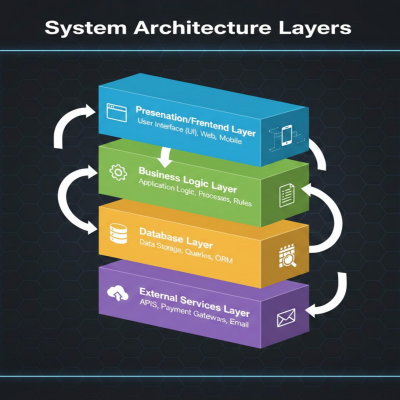
System Layer Model
System Layer Model
Clear separation between interaction layer, rule layer and outcome logic.
Trust, Limits and User Position
Trust Built Through Clarity Rather Than Promotion
For a platform like Goa Games India, trust cannot be built through pressure, exaggerated claims, or a constant push toward action. It has to come from structure, consistency, and restraint. The homepage therefore acts less like a promotional surface and more like a positioning layer. It tells the user what the platform is, what it is not, and how every later section should be read. This matters because trust weakens when a platform tries to be analytical in one place and persuasive in another. The user should not have to guess which voice is speaking.
That is why Goa Games India keeps its framing stable. It does not promise better outcomes, does not present mechanics as opportunity signals, and does not treat volatility, RTP, or feature design as marketing shortcuts. Instead, it uses calm editorial language and repeatable structure so the user can understand where the boundaries are. In practical terms, this means the site is designed to reduce distortion rather than create momentum. Trust comes from the absence of manipulation as much as from the presence of useful information.
The User’s Position Within the Platform
The user on Goa Games India is not treated as a lead to be pushed through a funnel. The user is treated as a reader who needs a clean interpretation layer. That changes the whole product posture. Instead of trying to increase urgency, the site gives the user enough structure to interpret information at a measured pace. Instead of amplifying emotional energy, it lowers noise. Instead of presenting every feature as an advantage, it clarifies what a feature actually does and what it does not do.
This positioning also means the user remains fully responsible for what happens outside the platform. Goa Games India can explain systems, terms, and operational logic, but it cannot make decisions for the reader and it does not take control of third-party environments. The platform is therefore useful in a very specific way: it improves clarity before action, not outcomes after action. That distinction is central to the homepage because it defines both the trust model and the limit model of the product.
Limits as Part of Product Honesty
A credible platform needs visible limits. If a site explains everything as though it were universally complete, always current, and always sufficient for every situation, it stops sounding reliable. Goa Games India avoids that problem by being explicit about scope. It explains mechanics and structures, but it does not replace operator documentation. It clarifies regulatory framing, but it does not issue legal advice. It discusses system logic, but it does not participate in game execution. These limits are not weaknesses. They are part of what makes the platform usable.
The same principle applies to the way the site handles behavioural and responsible-gaming framing. It can explain control tools, session boundaries, volatility, and system independence, but it does not pretend to function as an intervention system. It can encourage careful reading, but it cannot substitute for self-control or external support where those are needed. On a homepage, stating those boundaries clearly is not a disclaimer exercise; it is a product decision. It prevents the site from overreaching and helps preserve consistency across every later page.
A Stable Editorial Model for Ongoing Use
The homepage also has to establish that Goa Games India is not built around isolated content pieces. It is a system of pages connected by a stable editorial model. That model stays consistent whether the site is discussing game structure, legal framing, responsible gaming, policy language, or platform architecture. Concepts do not change meaning from one section to another. RTP remains a long-term model. RNG remains independent and memoryless. Volatility remains a distribution characteristic rather than a value promise. Wagering remains a rule layer rather than a progression device.
This consistency is one of the strongest trust signals a content-led platform can produce. It tells the user that the platform is not adapting its language opportunistically to fit different page types. The same standards apply everywhere. For a homepage, this is especially important because it defines the intellectual contract between the site and the reader. Goa Games India is not asking to be trusted because it looks polished. It is asking to be trusted because its structure, limits, and language remain coherent under pressure.
Trust & System Boundaries Matrix
Trust & System Boundaries Matrix
A structured reading of what the platform clarifies, what remains outside its control, and where the user’s responsibility begins.



















Comments